
AV Series
Multiplier Video Splitter
A composite video distribution system that accepts one video input and distributes it to multiple outputs simultaneously, with individually amplified outputs and adjustable gain control for consistent signal quality across all connected displays.
- Distributes 1 composite video input to 2, 4, 8, 12, or 16 outputs depending on model
- Each output is individually amplified to maintain consistent signal strength
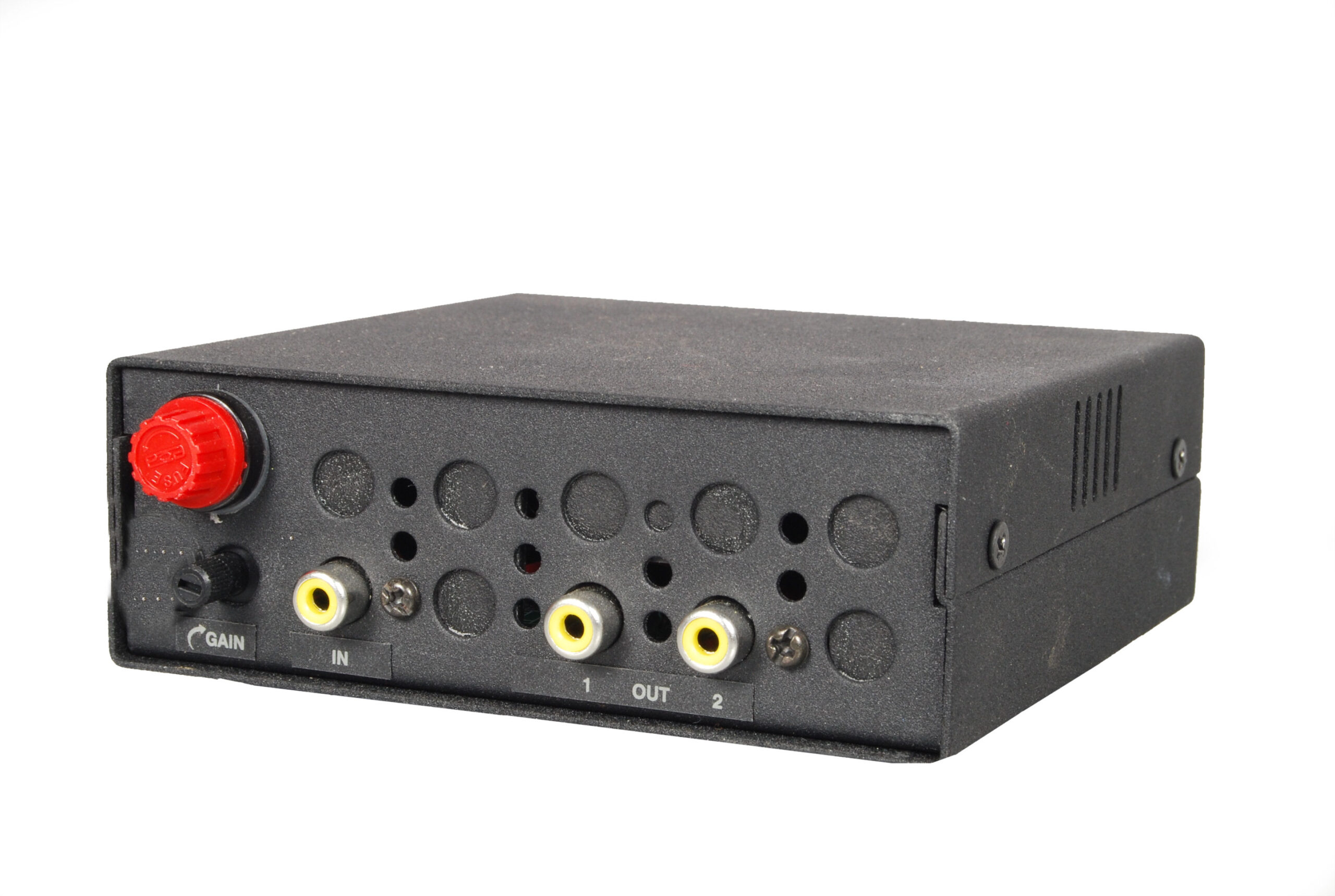
- Adjustable gain control to compensate for signal loss over longer cable distances
- Supports bandwidth up to 250 MHz (-3dB) with 75-ohm impedance matching
- Rugged metal enclosure for continuous use in professional environments
Max Resolution
1080p Full HD
Audio Input
Stereo Analogue
Output
Single HDMI
- In-house manufactured
- 2,000+ clients served
Product Overview
Reliable composite video distribution across multiple displays
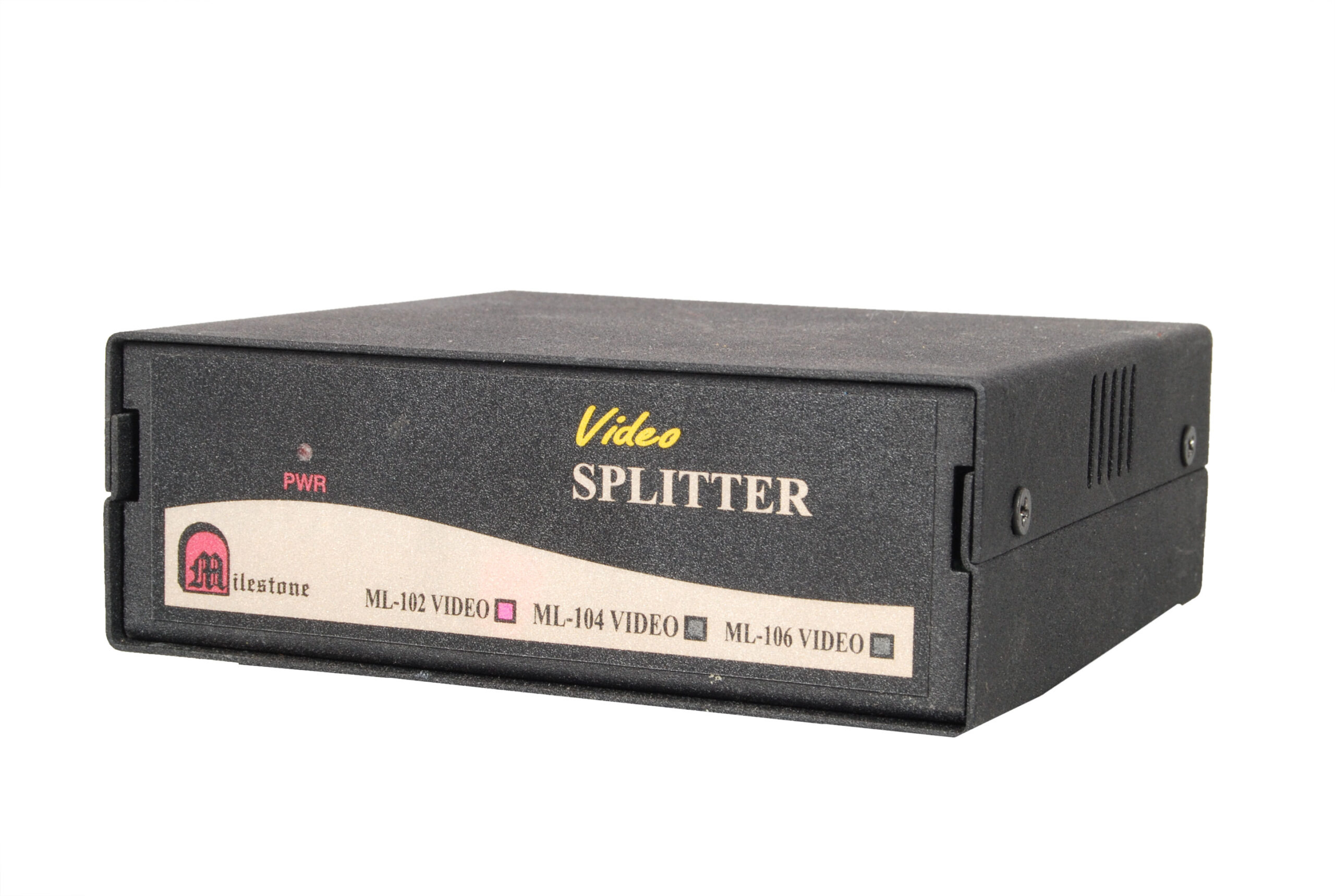
The Manual Multiplier Video Splitter ML 102 Video accepts a single composite video input and distributes it simultaneously to multiple output screens. The device is designed for continuous operation in professional environments such as CCTV systems, control rooms, and commercial AV installations where a single video source must be viewable across several displays at once.
Each output on the splitter is individually amplified, ensuring that signal strength remains consistent regardless of the number of connected displays. This individual amplification approach prevents the degradation that typically occurs when a single video source is passively split across multiple outputs without compensation.
A built-in gain adjustment feature allows the operator to control output signal levels, accommodating variations in cable length and display sensitivity. This makes the device adaptable to installations where cable runs differ significantly between individual output connections.
The device is housed in a rugged metal enclosure and operates on a 230V AC power supply, making it suitable for permanent rack-mounted or desktop installations. Models are available in five configurations, from 2 to 16 outputs, to match the specific requirements of each installation.
Output Range
Need a quote?
Our team responds within 24 hours with a tailored quote for your project or bulk order.
Key Features
Engineered for stable multi-display video distribution
One composite video input. Up to 16 individually amplified outputs. Manual operation designed for continuous professional use.
1 Input to Multiple Output Distribution
The splitter accepts a single composite video input and distributes it simultaneously to all connected output displays. Configurations range from 2 to 16 outputs depending on the model selected.
- Supports 1 composite video input
- Standard RCA connector with optional BNC support
- Compatible with CCTV cameras, DVRs, and media players
Individually Amplified Outputs
Each output channel is independently amplified to maintain consistent signal strength and clear video across all connected screens, regardless of the total number of outputs in use.
- Independent amplification per output channel
- Consistent signal strength across all displays
- No noticeable degradation in video clarity
Adjustable Gain Control
A built-in gain adjustment feature allows users to set the output signal level to suit varying cable lengths and display configurations, maintaining uniform brightness and contrast across all outputs.
- Compensates for signal loss over longer cable distances
- Maintains uniform brightness and contrast
- Adaptable to varied installation environments
Rugged Metal Enclosure
The device is housed in a durable metal enclosure built for long-term operation in professional environments. The compact form factor allows placement in AV racks, control panels, or desktop configurations.
- Metal construction for durability in continuous-use environments
- Compact design suitable for rack, panel, or desktop mounting
- Operates on 230V AC power supply
Stable Signal Performance
The splitter supports a bandwidth of up to 250 MHz (-3dB), maintaining smooth and stable composite video transmission. It operates at a nominal signal level of 1V peak-to-peak with a working range of 0.4V to 1.4V.
- 250 MHz bandwidth (-3dB) for stable transmission
- Nominal signal level: 1V peak-to-peak
- 75-ohm impedance for input and output matching
Plug-and-Play Operation
The device requires no complex configuration. Connect the composite video source to the input and connect the output displays, and the system operates immediately, making it suitable for rapid deployment in field installations.
- No software or drivers required
- Manual operation with no configuration overhead
- Integrates into CCTV, AV, and monitoring systems
Installation
Simple setup for standalone and integrated deployments
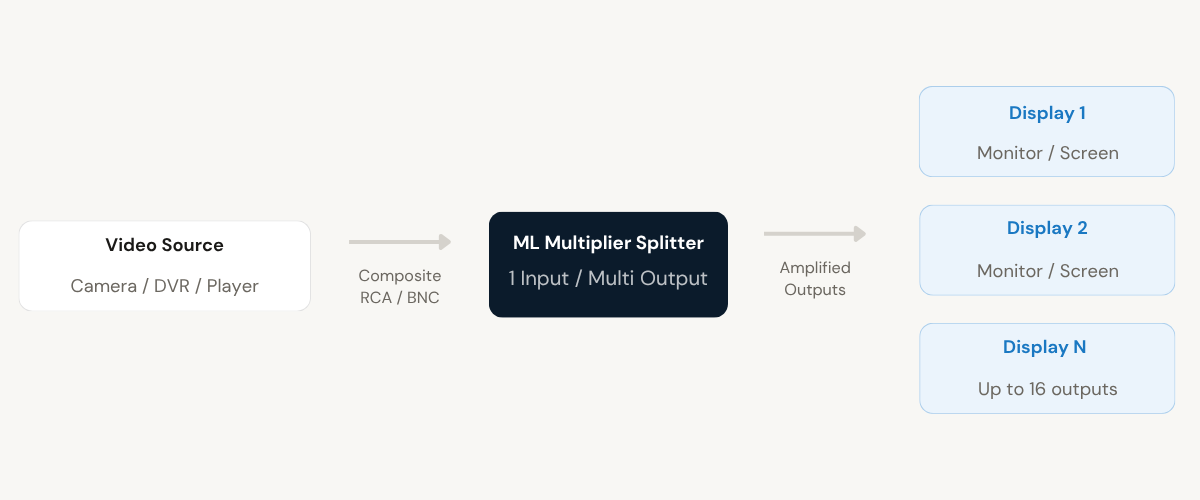
The Manual Multiplier Video Splitter connects directly between a composite video source and multiple display outputs, with no additional hardware or configuration required.
01
Source Connection
Connect the composite video source, such as a CCTV camera, DVR, or media player, to the single RCA input on the splitter. The device accepts standard composite video input with optional BNC connector support depending on the model. No configuration or driver installation is required prior to connection.
02
Output Display Connection
Connect the required number of display monitors or screens to the available output ports. Each output is independently amplified, so all displays receive a consistent signal regardless of how many are connected simultaneously. The gain control can be adjusted post-connection to optimise signal levels for the specific cable lengths in use.
03
Gain Adjustment
Once all connections are in place, use the built-in gain control to set the output signal level. This is particularly important in installations where output cables run over longer distances, as gain adjustment compensates for attenuation and maintains uniform brightness and contrast on all connected displays.
04
Integration into Existing Systems
The splitter can be integrated into existing CCTV surveillance systems, AV distribution networks, and centralised monitoring setups. Its compact metal enclosure is suitable for placement in AV racks, control panels, or on desktop surfaces, making it compatible with both standalone and large-scale system architectures.
Where the Manual Multiplier Video Splitter performs
Designed for environments requiring stable, continuous multi-display composite video distribution from a single source.
CCTV and Surveillance Systems
Distribute camera feeds from a single DVR or camera output to multiple security monitors simultaneously. Suitable for multi-station surveillance setups in commercial premises, warehouses, and entry points.
Control Rooms
Enable centralised monitoring by displaying the same composite video feed across multiple operator screens. Ensures all control room staff have equal visual access to the same source without signal degradation.
Retail and Commercial Displays
Show the same promotional or informational composite video content across multiple display units within a retail environment. Ensures consistent messaging across all screens from a single media source.
AV Installations
Integrate into AV setups requiring multiple display outputs from a single composite video source. Compatible with standard AV equipment used in corporate boardrooms, training rooms, and presentation environments.
Educational and Training Facilities
Distribute a live composite video feed to multiple screens across an event space or broadcast environment. Provides a reliable method for multi-point video display without requiring additional sources or encoders.
Event and Presentation Setups
Display video content from a single source across multiple classroom or auditorium screens. Suitable for institutions that require consistent composite video distribution in lecture halls, training centres, or public display areas.
Full specification sheet
- Signal Specifications
- Output Configuration
- Available Models
- Physical and Power
- Suitable Environments
FAQs about the Manual Multiplier Video Splitter
What does a Manual Multiplier Video Splitter do?
The Manual Multiplier Video Splitter takes one composite video input and distributes it to multiple output screens simultaneously. It allows a single video source to be displayed across several monitors without requiring multiple source devices or duplicating the input signal manually.
How many outputs can this video splitter support?
Depending on the model selected, the splitter supports 2, 4, 8, 12, or 16 outputs. The ML 102 V provides 2 outputs, the ML 104 V provides 4, the ML 108 V provides 8, the ML 112 V provides 12, and the ML 116 V provides 16. This range makes the device suitable for both small and large-scale installations.
Will the video quality remain stable across all outputs?
Yes. Each output is individually amplified to maintain consistent signal strength across all connected displays. This ensures clear and stable video at every output without noticeable degradation, regardless of how many screens are connected simultaneously.
What is the benefit of adjustable gain control in this splitter?
The gain control allows the operator to adjust the output signal level based on the cable lengths and display requirements of the specific installation. It compensates for signal attenuation that occurs over longer cable runs, helping maintain consistent brightness and contrast across all connected screens.
Where is the Manual Multiplier Video Splitter commonly used?
The device is commonly used in CCTV and surveillance systems, control rooms, retail and commercial display setups, and professional AV installations where the same composite video feed needs to be shown across multiple screens simultaneously and reliably.
What type of video signal does this splitter work with?
The device is designed for composite video signals. It accepts a single composite video input via an RCA connector, with optional BNC connector support depending on the model. It is compatible with composite video sources including CCTV cameras, DVRs, and standard AV media players. It is not designed for HDMI, VGA, or component video signals.
What are the signal level and impedance specifications for this device?
The device operates at a nominal composite video signal level of 1V peak-to-peak, with an acceptable working range of 0.4V to 1.4V. Both input and output impedance are 75 ohms, which ensures correct signal matching and minimal interference with standard composite video sources and display equipment. The supported bandwidth is up to 250 MHz (-3dB).
Products you may also need
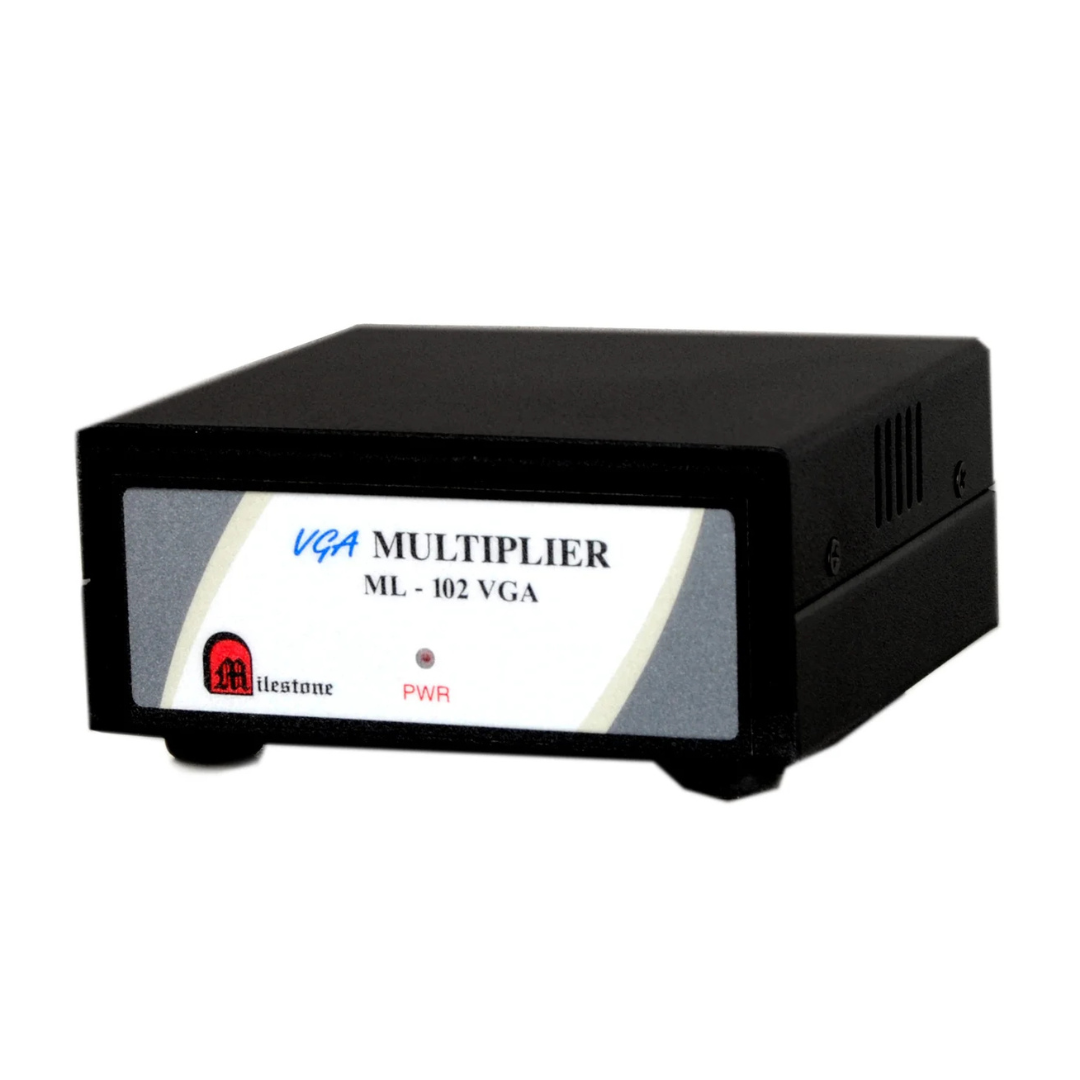
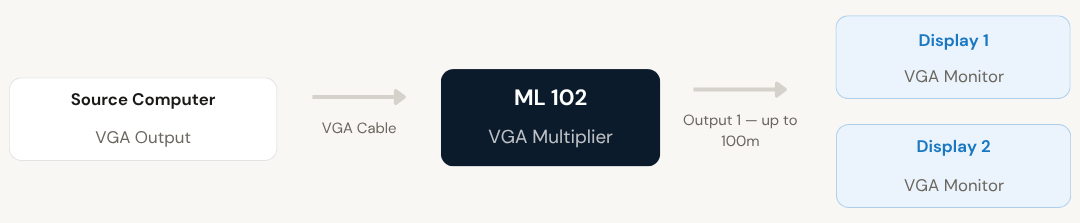
The ML 102 VGA Multiplier connects one computer to two VGA displays, distributing an...
Ready to order or have a specific requirement?
Our team responds within 24 hours. Bulk pricing, custom solutions, and pan-India delivery are available. Talk to an engineer directly about your setup.